Special Session 7: Accessible and Inclusive Technologies for Learners with Disabilities: From Preschool to Higher Education
Description
Educational technologies are transforming learning across all educational
levels; however, their accessibility and practical value for learners with
disabilities depend not only on technical innovation but also on inclusive
design, usability, educational context, and stakeholder participation. This
special session examines the design, implementation, evaluation, and lived use
of accessible and inclusive educational technologies from preschool to higher
education. It welcomes research on assistive technologies, digital learning
platforms, AI-supported applications, Universal Design for Learning, accessible
and multimodal content, and distance, online, and blended education.
Contributions may address a wide range of learners, including learners with
autism spectrum disorder, learners with intellectual disabilities or learning
disabilities, and learners with visual, hearing, physical, motor, or multiple
disabilities.
Rather than viewing technology solely as innovation, the session places
particular emphasis on lived experiences of technology use and on the barriers,
adaptations, and successful practices encountered in authentic educational
settings. The session invites empirical, design-based, practice-oriented, and
case-study research examining accessibility, usability, engagement, learning
outcomes, technology adoption, teacher workload, family involvement, and
equitable participation. Particular attention is given to how technologies are
adapted and evaluated in authentic educational environments, how learners,
educators, and families contribute to their design and implementation, and how
accessible solutions support continuity and transitions across educational
levels.
By bringing together researchers and practitioners from special education,
educational technology, human–computer interaction, and disability studies, the
session aims to develop an evidence-informed understanding of what effective
inclusive digital education requires. It seeks contributions that identify
barriers and facilitators, report promising practices, and offer transferable
design and implementation principles for accessible learning environments.
Session Topics
The topics of interest include, but are not limited to:
- Accessible and inclusive educational technologies across educational levels,
from preschool to higher education
- Distance, online, and blended education for learners with disabilities
- Technology use and adaptation for learners with disabilities, including
physical, developmental, intellectual, learning, or multiple disabilities;
sensory impairments; and autism spectrum disorder
- Usability, accessibility, and user experience of digital learning tools,
applications, and assistive technologies
- Educators’ and families’ lived experiences of technology-supported education
for learners with disabilities
- AI-supported applications in practice: design, adoption, use, and educational
outcomes
- Universal design for learning (UDL) and accessible multimodal digital content
- Technology-supported educational continuity, transitions, and lifelong
learning
Submission Method
Submit your Full Paper or your paper abstract-without publication (200-400
words) via Online Submission System, then choose
Special Session 7 (Accessible and Inclusive Technologies for Learners with Disabilities: From Preschool to Higher Education)
Session Organizers
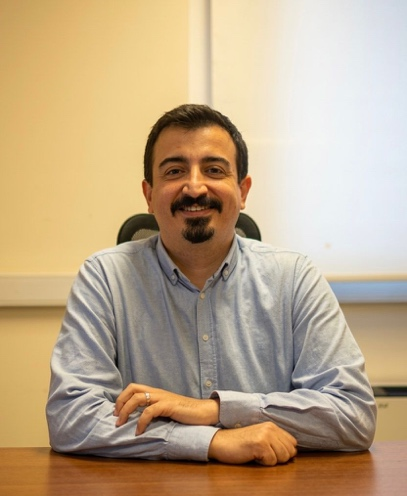 Asst. Prof. Halil Öztürk,
Ege University, Turkey
Dr. Halil Öztürk is an Assistant Professor at the
Department of Special Education, Ege University,
Turkey. He completed his undergraduate degree in
Intellectual Disability Teaching at Ankara
University, his master's degree at Dokuz Eylül
University, and his Ph.D. at Anadolu University,
where his doctoral dissertation proposed an
innovative collaborative model for inclusive
education among teachers, families, and specialists.
His research primarily focuses on Autism Spectrum
Disorder (ASD) and extends to teaching reading and
writing skills to students with learning
disabilities, professional ethics in special
education, applied behavior analysis and positive
behavioral supports, parental education and
transition processes, and stakeholder collaboration
in inclusive education. In recent years, his work
has increasingly centered on the use of artificial
intelligence tools in special education.
He has published in journals indexed in SCI and SSCI
and regularly presents at national and international
conferences in special education. He has also taken
part in various national and international research
projects in the field.
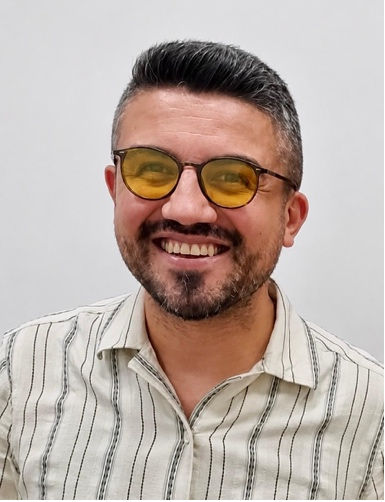 Asst. Prof. Mustafa Doğuş,
Anadolu University, Turkey
Dr. Mustafa Doğuş is an Assistant Professor in the
Department of Special Education at Anadolu
University, Türkiye, where he works in the Division
of Education for the Visually Impaired and serves as
Head of the Division. He earned his bachelor’s and
master’s degrees in the education of individuals
with visual impairments and his PhD in Special
Education from Gazi University. His doctoral
research focused on the design, development, and
usability of an accessible web-based examination
system.
His research interests include accessible and
inclusive educational technologies, assistive and
AI-driven technologies for learners with visual
impairments, digital and examination accessibility,
Braille literacy, tactile and multimodal learning,
Universal Design for Learning, accessible STEM
education, and the education of learners with visual
and multiple disabilities. He has participated in
projects addressing digital accessibility and
examination accessibility in open and distance
education. He is recently particularly interested in
designing digital learning and assessment
environments that support independent access and
equitable participation.
His recent work examines AI-assisted materials in
open and distance education, the online learning and
assessment experiences of learners with visual
impairments, and artificial intelligence and ethical
issues in special education. He has published in
national and international peer-reviewed journals,
including the British Journal of Visual Impairment,
and has contributed book chapters on assistive
technologies, visual impairment, accessibility, and
artificial intelligence in special education.